
What Is Immunopeptidome Profiling?
Immunopeptidome profiling — also called immunopeptidomics or HLA ligandome analysis — is the direct, mass-spectrometry-based identification of peptides naturally presented by MHC class I and class II molecules on the cell surface.
Every nucleated cell continuously samples its internal proteome, digests proteins into short peptides (typically 8–12 amino acids for MHC-I, 13–25 for MHC-II), and displays them on MHC molecules for immune surveillance. These displayed peptides are the language the immune system uses to distinguish normal from abnormal — infected, mutated, or stressed cells.
Unlike discovery proteomics which measures total protein abundance, immunopeptidomics reveals only the subset of peptides that survive antigen processing and successfully load onto MHC — the ones that matter for immunotherapy.
Content Guide
- Prediction vs Direct Detection
- MHC Peptides by Immunopeptidomics
- Service Advantages
- Workflow
- Cancer, Vaccine & Autoimmune
- Sample Requirements
- Deliverables
Computational Prediction vs Direct Immunopeptidomics
Every tumor sequencing project generates a list of predicted neoantigens — hundreds to thousands of candidates ranked by algorithmic binding scores. The problem: antigen processing involves proteasomal cleavage, TAP transport, and MHC loading — steps that in silico tools model with limited accuracy. Most predicted "strong binders" are never presented. And the antigens that do reach the cell surface often come from sources no algorithm can predict — RNA editing, non-canonical ORFs, spliced peptides.
Immunopeptidomics eliminates the guesswork. We enrich MHC complexes directly from your sample, elute the bound peptides, and identify them by LC-MS/MS. The result is an experimentally verified list — these peptides were on the cell surface. These are the ones T cells can see.
When to Use Immunopeptidome Profiling
- You're building a cancer vaccine and need patient-specific neoantigens confirmed at the protein level before committing to GMP peptide synthesis and clinical manufacturing.
- You're developing a TCR-T therapy and must verify that your target antigen is naturally processed and presented — not just predicted — before investing in receptor engineering and IND-enabling studies.
- You're studying checkpoint inhibitor response and need to profile the actual immunopeptidome of responders vs non-responders to understand what antigens drive efficacy.
- You're designing an infectious disease vaccine and need to identify which pathogen-derived peptides are genuinely presented on infected cells — not which ones score highest in silico.
- You're investigating autoimmune disease and need to identify self-peptides presented in affected tissue to pinpoint the antigens driving T cell-mediated pathology.
MHC Peptides Directly Identified by Immunopeptidomics
Six categories of immunopeptide that computational pipelines systematically overlook — and that only direct MS detection can identify.

Non-Canonical Peptides
circRNA-encoded, lncRNA-derived, and proteasome-spliced peptides are invisible to standard mutation-calling pipelines — but immunopeptidomics detects them directly from MS/MS spectra.

Post-Translational Modifications
Phosphorylated, citrullinated, and deamidated peptides can create neo-epitopes — these modifications alter MHC binding and T cell recognition but are invisible to DNA/RNA sequencing alone.

RNA-Level Variants
88% of verified neoantigen candidates in multi-tumor immunopeptidomics analysis originate from RNA-level variants — A-to-I editing, alternative splicing, non-canonical translation — that DNA sequencing never detects.

True MHC Occupancy Data
Prediction tools output binding affinity scores. Only immunopeptidomics tells you whether a peptide actually occupies MHC molecules at the cell surface — and at what relative abundance.

MHC-II Coverage
MHC-II binding prediction is significantly less accurate than MHC-I. Direct immunopeptidomics of both classes provides reliable data for CD4+ T cell epitope discovery — critical for durable anti-tumor immunity.

Allele-Specific Profiling
Pan-allele antibodies capture peptides from all HLA types simultaneously. For focused studies, we offer allele-specific enrichment to profile presentation by individual HLA alleles — critical for TCR-T target specificity.
Immunopeptidome Profiling Service Advantages

Identification Depth
10,000+ Peptides / MHC Class
Identify and characterize >10,000 MHC-I and >10,000 MHC-II bound peptides from a single sample, providing comprehensive antigen landscape coverage.

Direct Evidence
No Prediction Bias
MS-based detection identifies what is actually presented — including non-canonical, mutated, and modified peptides that algorithms cannot predict.

Dual MHC Coverage
MHC-I + MHC-II Simultaneously
Profile both CD8+ and CD4+ T cell epitopes in a single workflow — parallel enrichment from the same sample for a complete immunopeptidome view.

Sample Efficiency
As Low As 2×10⁸ Cells
Optimized enrichment protocols minimize sample demand, making the service suitable for precious clinical specimens and limited biopsy material.

Neoantigen Prioritization
Binding Affinity + Immunogenicity Scores
Every identified peptide is annotated with NetMHCpan binding predictions, source protein mapping, and immunogenicity scoring for actionable target ranking.

Multi-Species Support
Human · Mouse · Custom Species
Validated antibodies for human HLA-A/B/C and HLA-DR, mouse H-2 and I-A/I-E, with custom antibody development available for other preclinical models.
Step-by-Step Immunopeptidomics Workflow
From sample to prioritized neoantigen list — our workflow is optimized for sensitivity, reproducibility, and direct biological relevance at every stage.
Cells or tissue are lysed under non-denaturing conditions to preserve MHC-peptide complexes. Matrix-specific protocols for cell lines, fresh-frozen tumor tissue, and PBMCs.
Cleared lysates are incubated with pan-allele MHC-specific antibody-bead complexes. W6/32 for HLA class I (A, B, C), L243 for HLA-DR, plus optional allele-specific antibodies for focused studies.
Mild acidic elution releases MHC-bound peptides while preserving sequence integrity. C18 solid-phase extraction removes salts, detergents, and MHC protein fragments for clean MS input.
High-resolution Orbitrap or timsTOF acquisition optimized for short, non-tryptic peptides. Data-dependent acquisition (DDA) for discovery, with DIA option for quantitative comparisons across conditions.
MS/MS spectra searched against reference proteome plus customized databases (patient-specific mutations, non-canonical ORFs). De novo sequencing for peptides not matched to known databases.
Identified peptides annotated with NetMHCpan binding affinity, source protein, mutation status, and immunogenicity prediction. Prioritized candidate list with supporting spectral evidence delivered in a comprehensive report.
- MHC-I and MHC-II profiling from the same sample input
- Pan-allele and allele-specific enrichment options
- De novo sequencing captures non-canonical and modified peptides
- Expert immunology support from study design to neoantigen prioritization
Immunopeptidomics for Cancer, Vaccine, and Autoimmune Research

Cancer Neoantigen Discovery
- Directly identify tumor-specific mutated peptides presented on patient HLA molecules.
- Prioritize candidates for personalized cancer vaccines and adoptive T cell therapies.

Infectious Disease Vaccine Design
- Profile pathogen-derived peptides presented on infected cells to identify vaccine epitopes.
- Applicable to viral, bacterial, and parasitic pathogens across multiple HLA types.

Autoimmune Antigen Profiling
- Identify self-peptides presented in affected tissues to characterize autoantigen repertoires.
- Relevant for type 1 diabetes, rheumatoid arthritis, multiple sclerosis, and celiac disease.

Immunotherapy Biomarker Discovery
- Compare immunopeptidomes of responder vs non-responder tumors to checkpoint inhibitors.
- Identify antigen presentation signatures predictive of clinical proteomics outcomes.
Sample Requirements

Critical note: Samples must be processed under non-denaturing conditions. Snap-freeze immediately after collection. Avoid fixatives (formalin, paraffin) — these crosslink MHC complexes and prevent enrichment.
HLA typing: Provide HLA genotype if available. If unknown, we perform HLA typing as part of the workflow.
| Sample Type | Recommended Input | Storage & Handling |
|---|---|---|
| Cell Lines (adherent/suspension) | ≥ 2×10⁸ cells | Snap-freeze pellet; avoid PBS washes with detergents |
| Fresh-Frozen Tumor Tissue | ≥ 300 mg wet weight | Snap-freeze within 30 min of resection; aliquot to avoid re-freeze |
| FFPE Tissue | 2×5 μm sections (50–100 mm2 each) | Store ambient, low humidity; provide H&E reference slide |
| PBMCs | ≥ 5×10⁷ cells | Isolate within 8 h of collection; freeze in RPMI + 10% DMSO |
| Serum/Plasma | ≥ 5 mL | Soluble MHC analysis available; freeze promptly |
Not sure about sample suitability?
Contact us — we will evaluate your sample type and recommend the optimal enrichment strategy.
Immunopeptidomics Deliverables
From raw spectra to actionable neoantigen candidates
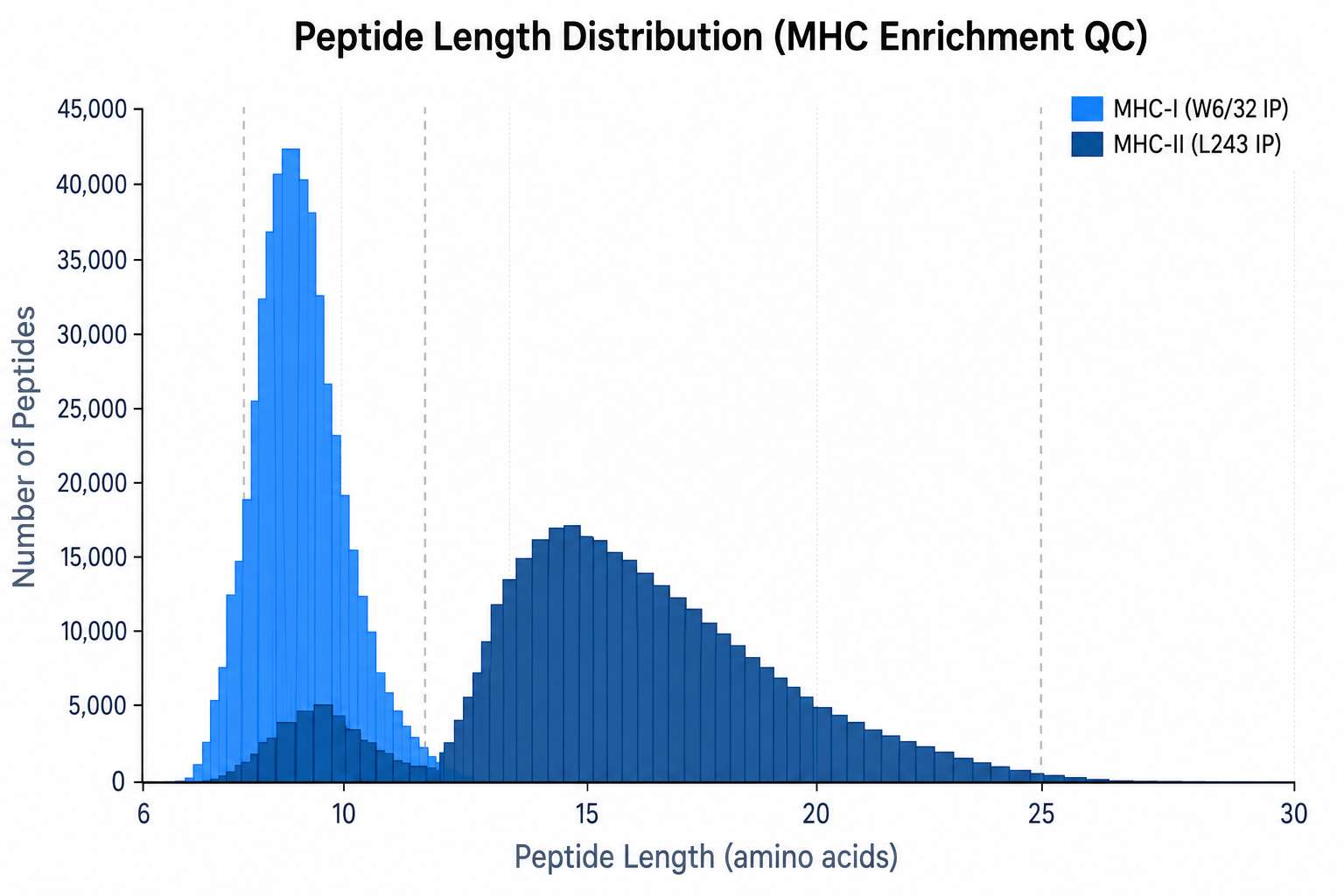
MHC-I (8–12 aa) and MHC-II (13–25 aa) peptide length distributions confirm enrichment specificity and reveal the full immunopeptidome landscape.
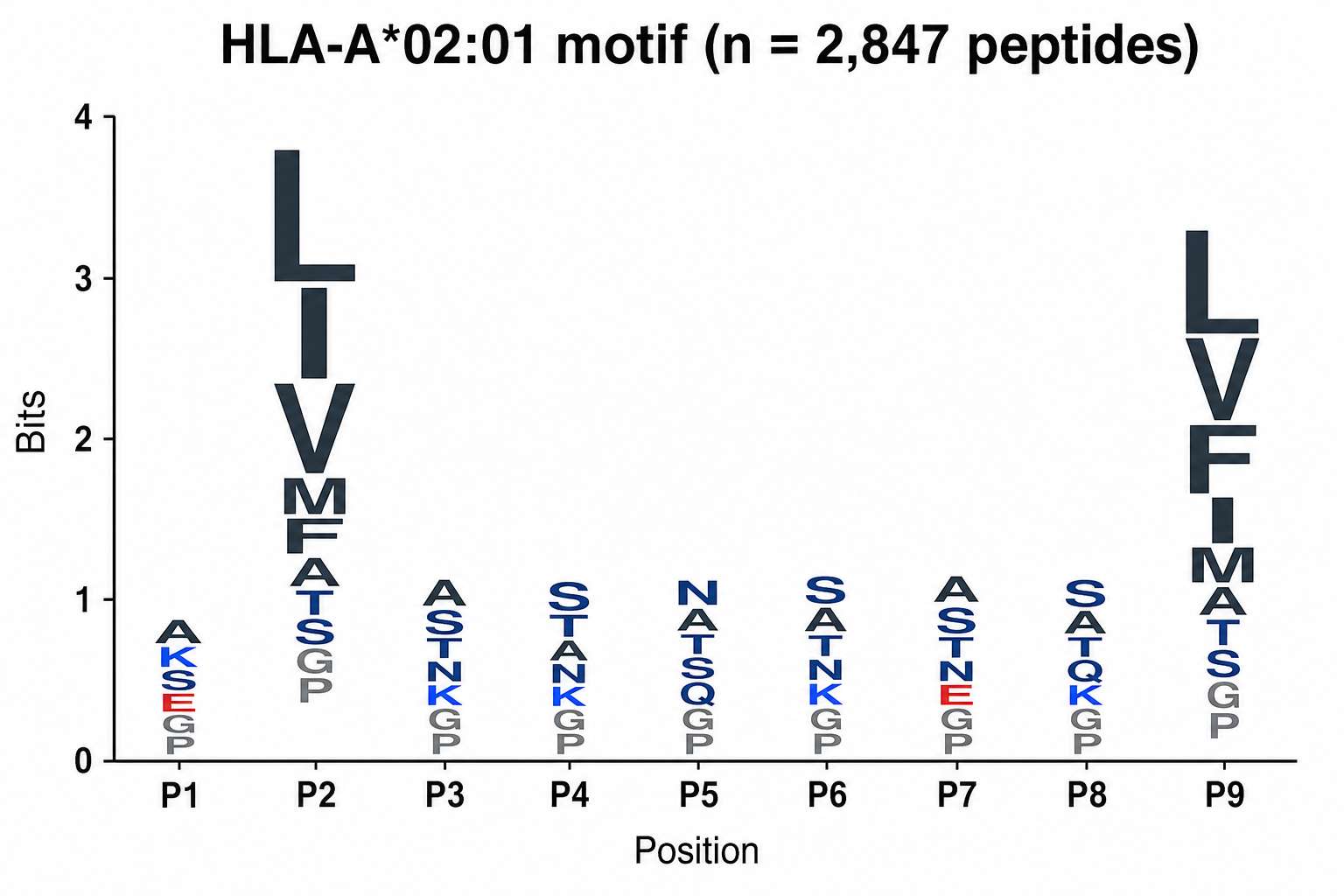
HLA allele-specific binding motifs extracted from your data validate that enrichment captured the correct HLA restriction — foundational QC for all downstream neoantigen analysis.
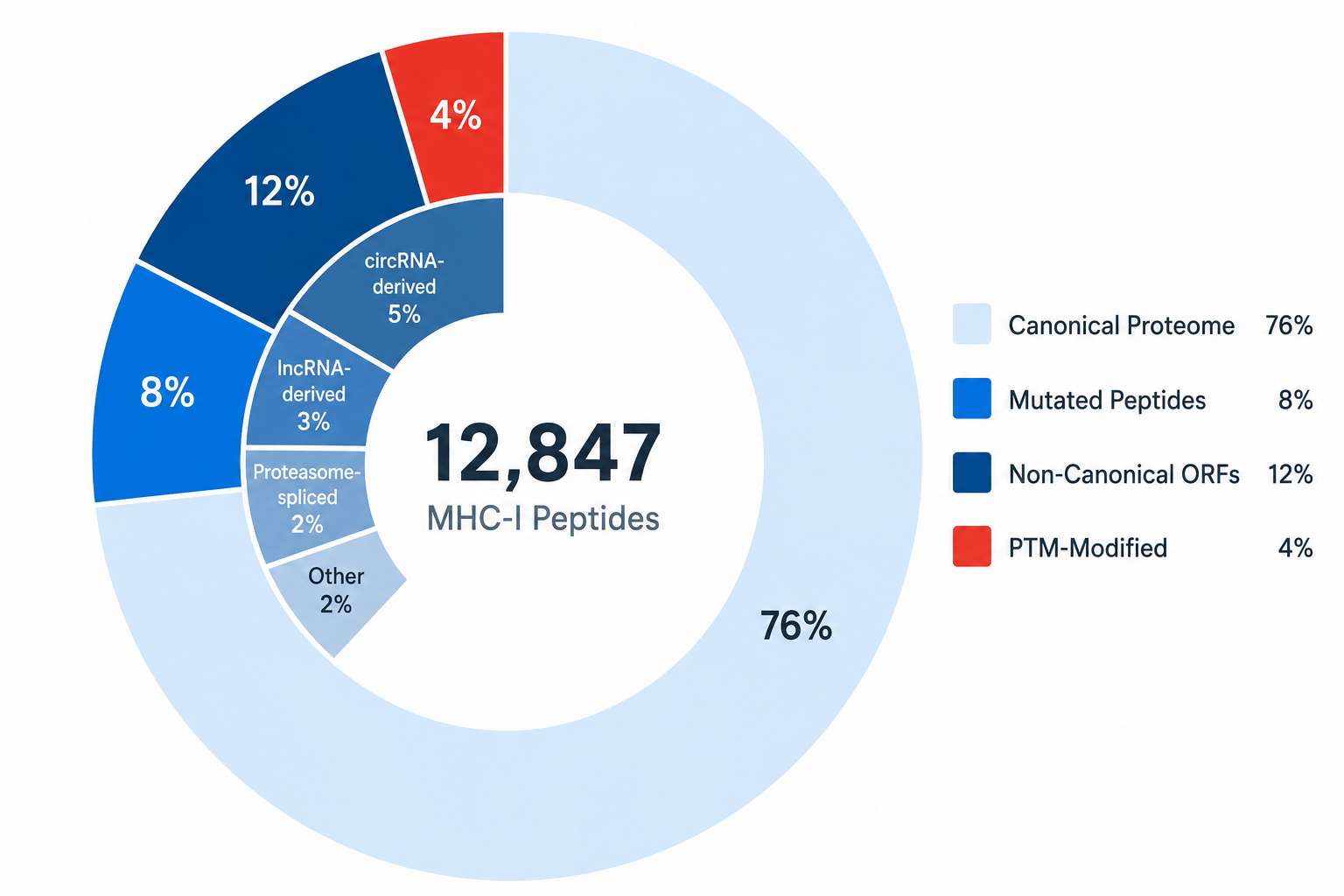
Source protein breakdown: canonical proteome, mutated peptides, non-canonical ORFs, circRNA-derived, and proteasome-spliced — revealing antigen sources beyond standard pipelines.
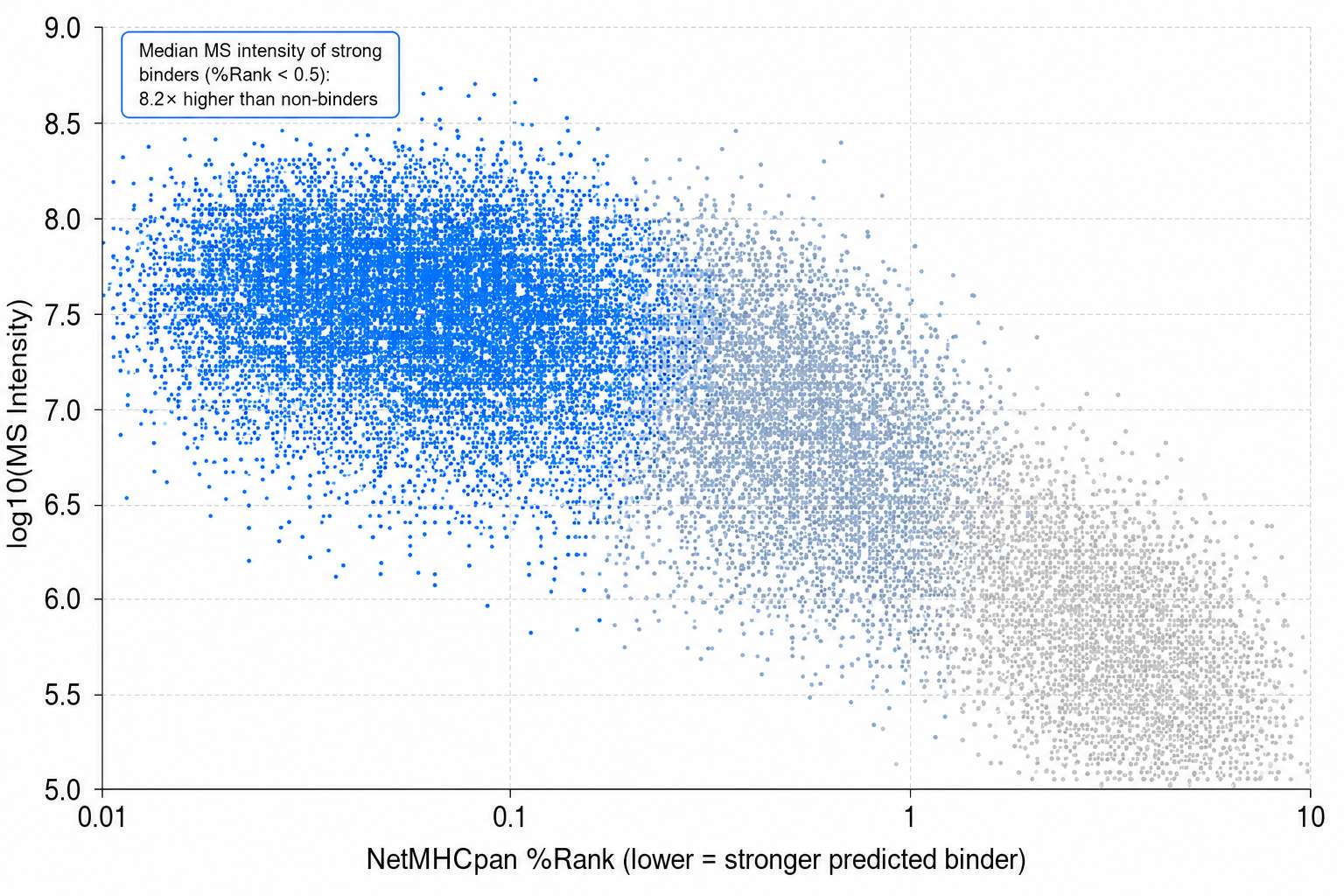
Predicted vs observed: NetMHCpan binding affinity (x-axis) plotted against MS-detected peptide intensity (y-axis) — high-affinity binders confirmed by direct detection carry the highest confidence.
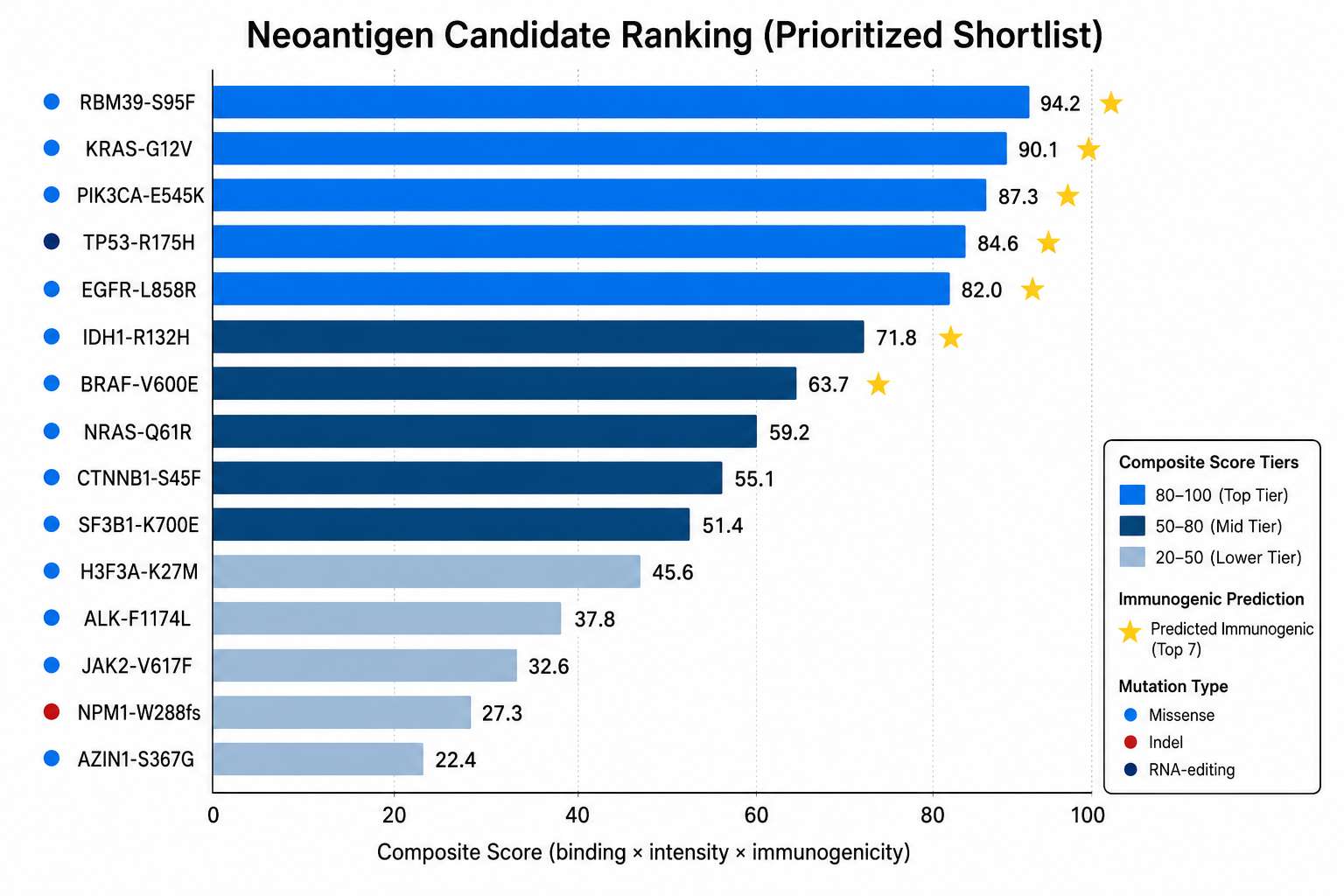
Prioritized neoantigen candidate ranking: each bar represents a peptide, sorted by combined binding affinity × immunogenicity score — your shortlist for vaccine or TCR-T development.
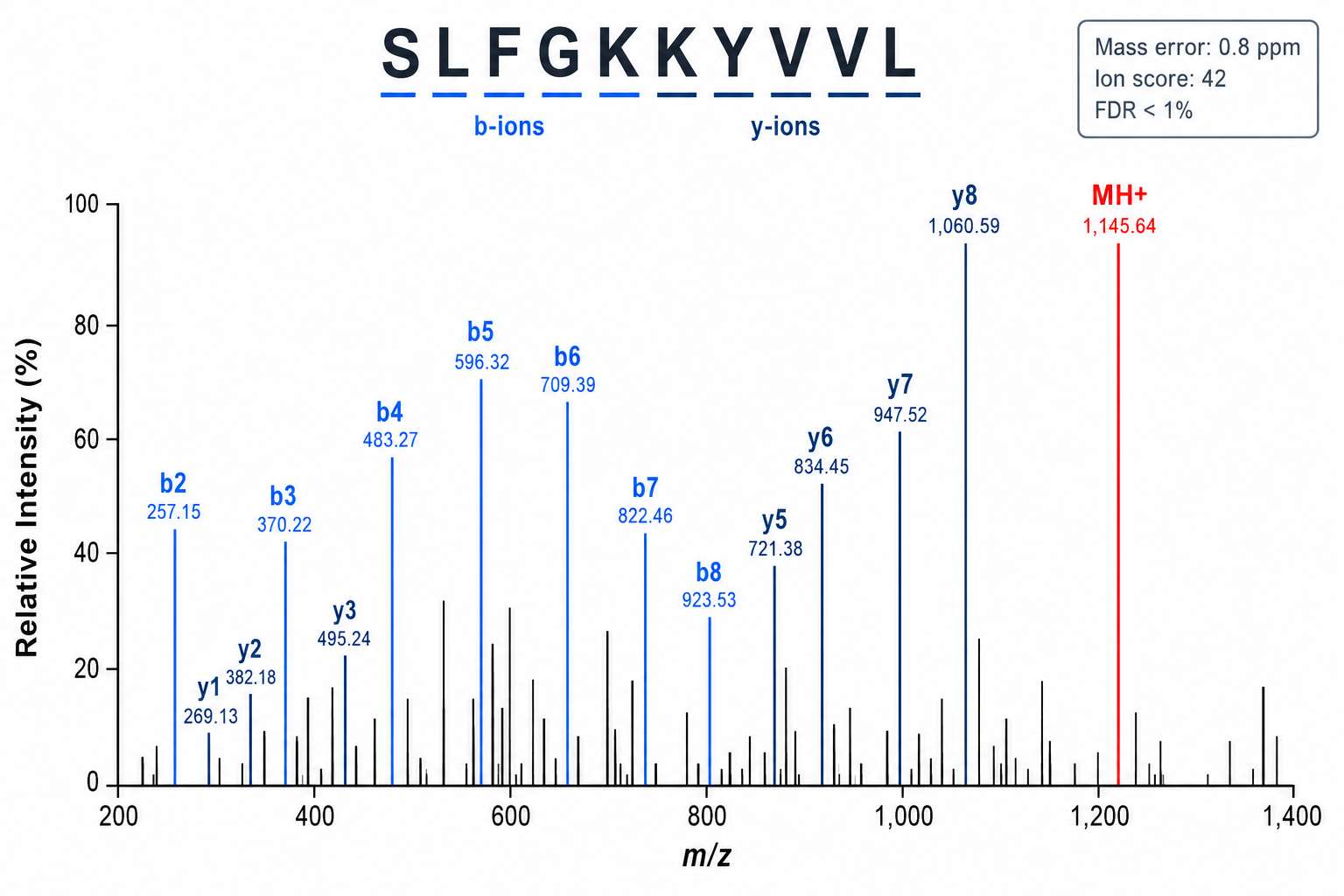
Representative MS/MS spectrum of a validated neoantigen peptide: annotated b- and y-ion series confirming the sequence — the gold-standard evidence for peptide identity.
Standard Deliverables Checklist
- Complete MHC-I and MHC-II peptide identification lists
- Peptide length distribution and HLA binding motif analysis
- Source protein annotation (canonical + non-canonical)
- Mutation mapping against provided WES/RNA-seq data
- NetMHCpan binding affinity predictions for all peptides
- Neoantigen candidate prioritization with immunogenicity scoring
- Annotated MS/MS spectra for top candidates
- Raw MS data files (.raw or .d format)
- Complete experimental methods documentation
Immunopeptidomics Frequently Asked Questions
It is optional but strongly recommended. Without matched WES or RNA-seq data, we can still identify the full immunopeptidome (all presented peptides and their source proteins), but we cannot distinguish mutated neoantigens from wild-type self-peptides.
With matched sequencing data, we map identified peptides against your patient-specific mutation list, flag neoantigen candidates, and prioritize them by binding affinity and immunogenicity. This significantly increases the translational value of the dataset.
Yes. Our high-resolution MS/MS acquisition captures mass shifts corresponding to common modifications — phosphorylation, citrullination, deamidation, oxidation, and acetylation. Modified peptides can create neo-epitopes that are absent from unmodified reference databases.
For focused PTM immunopeptidomics (e.g., phosphopeptide-enriched MHC analysis), we offer specialized workflows that combine MHC IP with phosphopeptide enrichment for deeper coverage of modified antigen landscapes.
Our pan-allele workflow uses the W6/32 antibody, which recognizes a monomorphic epitope on HLA-A, HLA-B, and HLA-C (class I), and L243 for HLA-DR (class II). This captures peptides from all common HLA alleles without requiring allele-specific reagents.
For projects requiring allele-specific profiling (e.g., validating a TCR restricted to HLA-A*02:01), we offer custom enrichment with allele-specific antibodies. Please discuss your allele requirements during study design.
The number varies significantly with tumor mutational burden (TMB) and HLA type. In published studies, immunopeptidomics typically yields 50–200 neoantigen candidates per tumor from 10,000+ total MHC-I peptides, of which 5–30 demonstrate immunogenicity in downstream T cell assays.
Importantly, the candidates identified by immunopeptidomics have a substantially higher validation rate than purely computational predictions, because they are confirmed to be naturally processed and presented — saving significant time and cost in downstream validation.
Yes. We support mouse MHC class I (H-2K, H-2D using M1/42.3.9.8 antibody) and MHC class II (I-A/I-E using M5/114 antibody). We also support rat (OX18 for RT1A) and can develop custom enrichment strategies for other preclinical species.
This makes our service suitable for syngeneic mouse tumor models, transgenic HLA mouse models, and preclinical vaccine efficacy studies where immunopeptidome profiling is needed to confirm antigen presentation.
Case Study: Immunopeptidomics Identifies Neoantigens That DNA Sequencing Misses
302
DNA mutations per tumor
4,024
RNA variants per tumor
90
neoantigen candidates identified
21
confirmed by T cell assay
Background
Cancer neoantigen discovery has traditionally relied on DNA whole-exome sequencing to identify non-synonymous mutations, followed by computational prediction of MHC binding. However, this DNA-centric approach systematically misses a vast reservoir of potential antigens: RNA editing events, alternative splicing products, non-canonical ORF translations, and transcript-level variants that are never detected at the DNA level. The consequence is that many genuinely presented neoantigens remain invisible to standard discovery pipelines — and cancer vaccines built on DNA-only predictions risk targeting peptides that never reach the tumor cell surface.
Study Design & Samples
A research team profiled tumors from 32 patients across 25 distinct cancer types. For each patient, they collected matched tumor tissue and performed three parallel analyses: whole-exome sequencing (DNA), RNA sequencing, and MS-based immunopeptidomics. HLA class I-bound peptides were enriched from tumor lysates, identified by high-resolution LC-MS/MS, and mapped against patient-specific variant databases built from both DNA and RNA data. Candidate neoantigens identified by immunopeptidomics were then tested for immunogenicity using in vitro T cell activation assays — the definitive test of whether a peptide can trigger a tumor-specific immune response.
Technical Methods
Immunopeptidomics: Pan-allele W6/32 antibody-based immunoprecipitation of HLA class I complexes from tumor tissue, followed by mild acidic elution of bound peptides and LC-MS/MS analysis. Variant detection: DNA whole-exome sequencing and RNA-seq were performed on matched tumor specimens. Patient-specific variant databases were constructed from both DNA and RNA data to capture mutations, RNA editing events, and non-canonical translation products. Neoantigen identification: MS/MS spectra were searched against the reference proteome and patient-specific variant databases. Peptides uniquely mapping to tumor-specific variants were classified as neoantigen candidates. Immunogenicity validation: Candidate neoantigens were synthesized and tested in T cell activation assays to confirm they could elicit an immune response.
Key Findings
| Metric | DNA-Seq Only | DNA + RNA + Immunopeptidomics |
|---|---|---|
| Variants detected per tumor (avg) | 302 | 4,024 (13× more) |
| Neoantigen candidates identified | 3 | 90 (88% from RNA variants) |
| Immunogenic neoantigens (T cell assay) | 0 | 21 (95% from RNA variants) |
| Cross-patient shared targets | ~3% | 11% (37× more) |
The bottom line: without immunopeptidomics, every single T cell target was invisible. A vaccine designed from DNA-only predictions would have targeted peptides not present on the tumor surface — wasting months of development and hundreds of thousands in GMP synthesis.
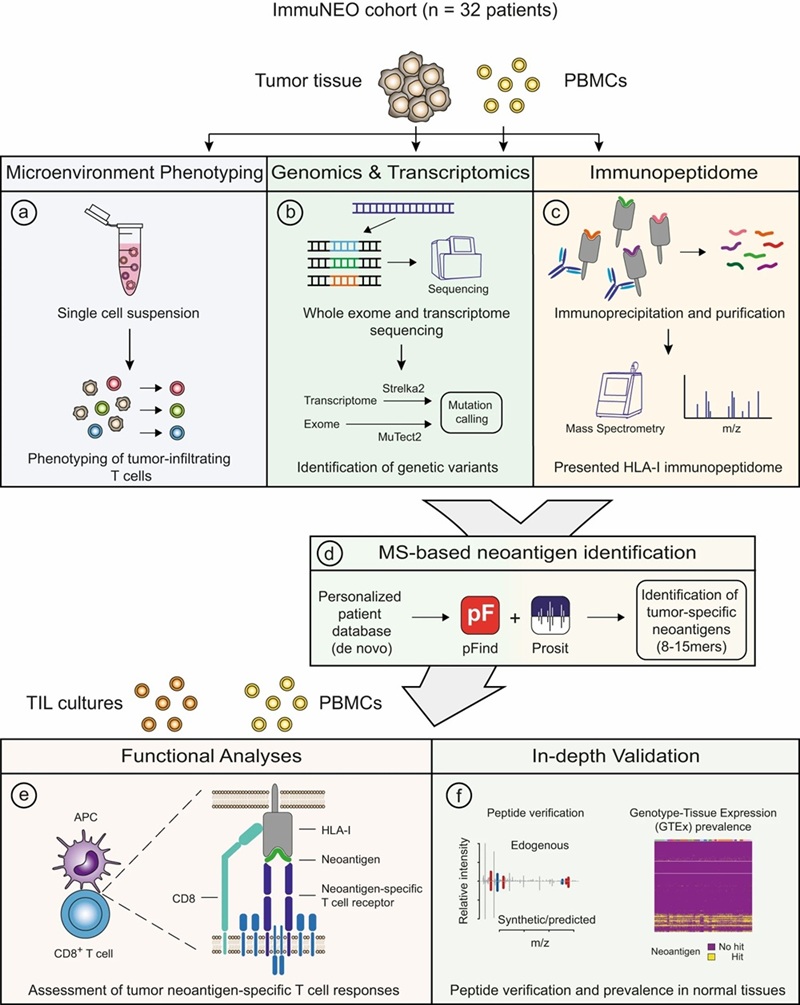
Integrated workflow: DNA-seq identifies mutations, RNA-seq captures editing events, immunopeptidomics confirms which peptides reach the cell surface — only the intersection of all three yields validated T cell targets.
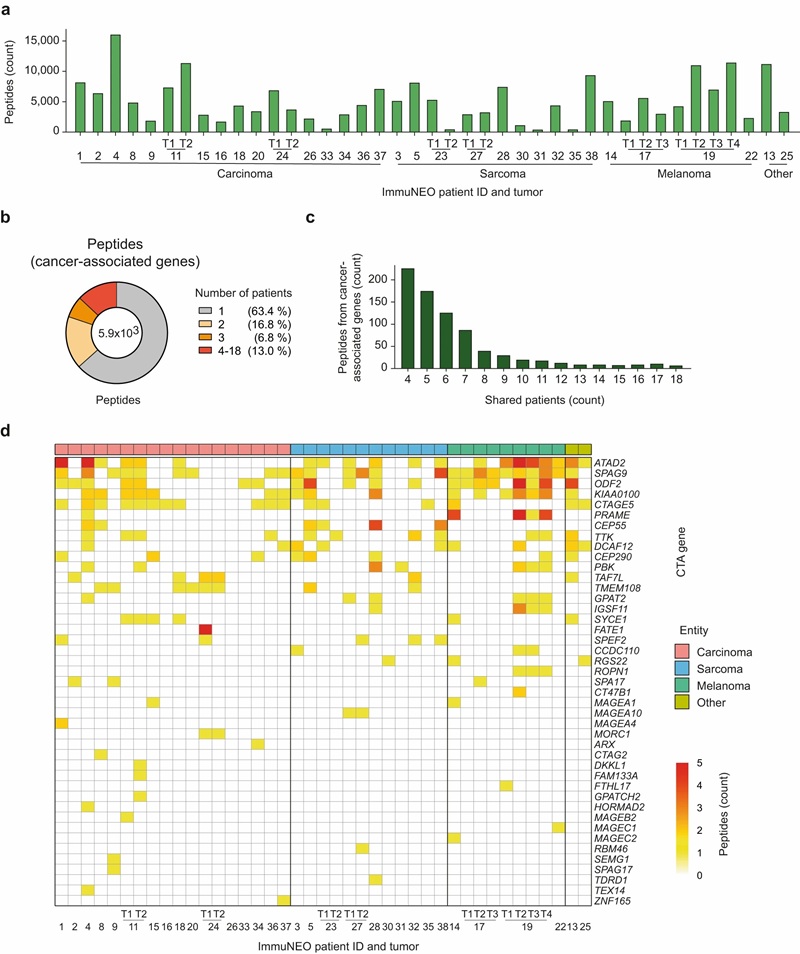
HLA-I immunopeptidome per tumor: thousands of peptides identified, annotated by source protein. RNA-derived variants and non-canonical ORFs consistently appear — categories invisible to DNA-only pipelines.
What This Means for Immunopeptidomics Studies
- If you're building a cancer vaccine from DNA-only predictions, your targets likely don't exist at the protein level. This dataset found zero immunogenic neoantigens from DNA variants alone. Immunopeptidomics is not an add-on — it's the only way to confirm what's actually presented.
- RNA-derived neoantigens dominate. 88% of candidates and 95% of immunogenic hits came from RNA-level events — A-to-I editing, splicing variants, non-canonical translation — that DNA sequencing never sees. If your pipeline is DNA-only, you're systematically blind to the most abundant source of real targets.
- Immunopeptidomics de-risks your IND package. Regulators increasingly expect experimental evidence that a vaccine's component peptides are naturally processed and presented. MS-validated neoantigen data provides this — computational prediction alone does not.
- Shared RNA-derived targets enable off-the-shelf vaccines. With 37× more shared targets at the RNA level across patients, immunopeptidomics data opens a path to population-scale cancer vaccines — reducing the logistical burden of fully personalized manufacturing.
Reference: Tretter C, de Andrade Krätzig N, Pecoraro M, et al. Proteogenomic analysis reveals RNA as a source for tumor-agnostic neoantigen identification. Nature Communications. 2023;14:4632. doi:10.1038/s41467-023-39570-7