Get Your Custom Quote

Online Inquiry

Immunoaffinity-LC-MS/MS Quantification Service

High-sensitivity targeted protein quantification combining antibody-based immunoaffinity enrichment with high-resolution LC-MS/MS detection — delivering sub-ng/mL LODs for low-abundance proteins, biomarkers, and biotherapeutics in plasma, serum, CSF, and tissue matrices. Our IA-LC-MS/MS platform supports both protein-level immunocapture and peptide-level SISCAPA enrichment strategies to match the specific sensitivity requirements of each project.

Research Use Only (RUO) Notice: All services and data provided are strictly for non-clinical research purposes. Our analytical results are not intended for clinical diagnosis, patient management, or therapeutic decision-making.

Services Technologies Demo Case Study FAQ Related Services

CORE SERVICE

Immunoaffinity-LC-MS/MS Quantification for Low-Abundance Protein Targets

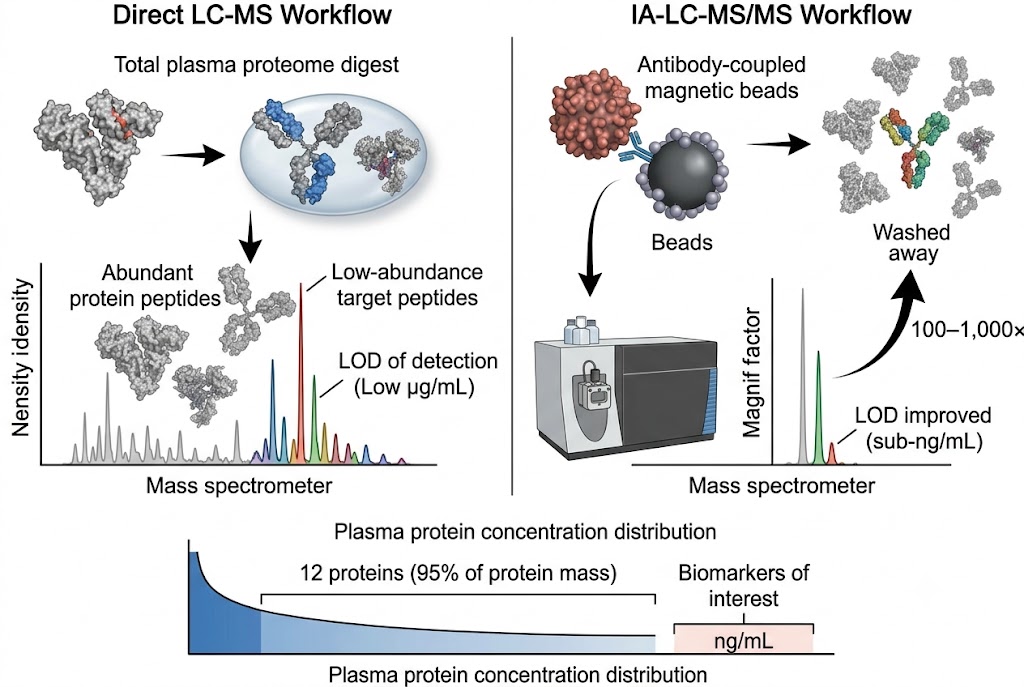
A fundamental limitation of direct LC-MS-based protein quantification is dynamic range — in plasma, 95% of protein mass comes from just 12 abundant proteins, while the majority of clinically relevant biomarkers exist at low ng/mL or below. Immunoaffinity-LC-MS/MS breaks this limitation by adding a specific antibody-based enrichment step before mass spectrometric analysis, concentrating the target analyte while eliminating matrix interferences and delivering 100-1,000× sensitivity improvement over direct LC-MS. As part of our comprehensive targeted proteomics and absolute quantification portfolio, IA-LC-MS/MS bridges the gap between direct LC-MS and immunoassay-level sensitivity for low-abundance targets. We provide end-to-end support from antibody reagent selection and assay design through method development, analytical validation, and sample cohort analysis.

  • Protein-Level Immunocapture: Target-specific antibodies immobilised on magnetic beads capture intact proteins from biological matrices, followed by on-bead digestion and LC-MS/MS quantification — ideal for targets with well-characterised antibodies or when PTM/isoform information must be preserved.
  • Peptide-Level SISCAPA Enrichment: Anti-peptide antibodies capture specific proteotypic tryptic peptides after total sample digestion, providing a scalable workflow for multiplexed quantification of 5–30+ targets per assay with sub-ng/mL sensitivity.
  • PRM/4D-PRM Readout with Stable Isotope Standards: High-resolution parallel reaction monitoring on Orbitrap and timsTOF platforms with AQUA heavy-labeled or full-length SILAC protein internal standards for absolute quantification with defined LOD, LOQ, and inter-assay reproducibility.
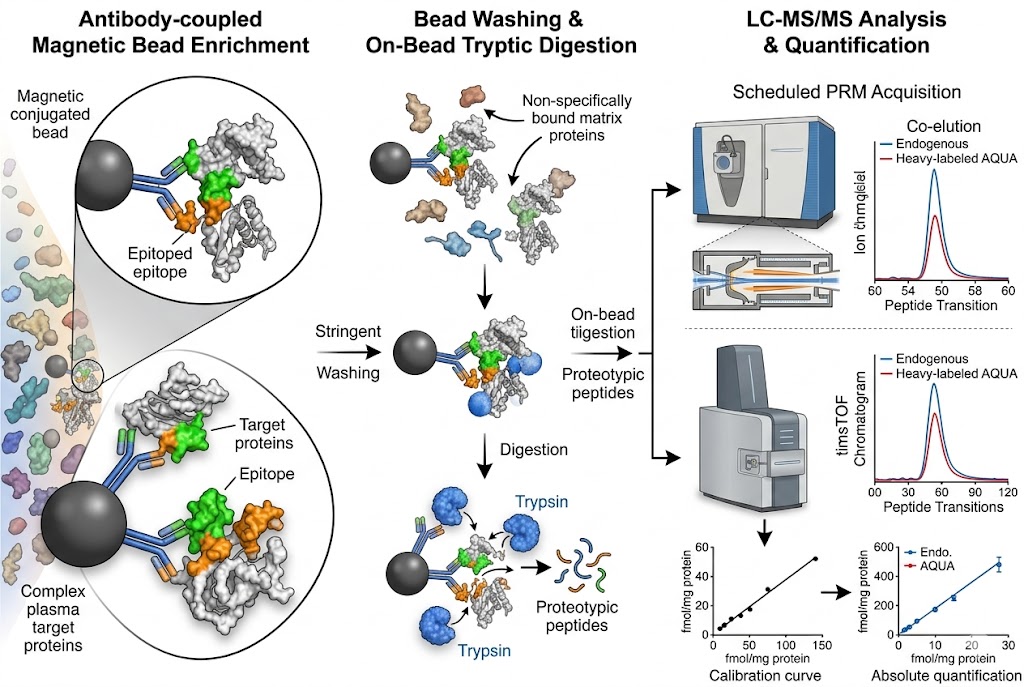
Immunoaffinity-LC-MS/MS quantification workflow illustrating antibody-based enrichment from complex biological matrices with magnetic bead capture, on-bead digestion, and high-resolution PRM detection on Orbitrap and timsTOF platforms

Overview of the IA-LC-MS/MS quantification platform: from antibody-coupled magnetic bead enrichment and stringent washing through stable isotope internal standard normalisation and high-resolution parallel reaction monitoring on Orbitrap and timsTOF mass spectrometers.

Understanding Immunoaffinity-LC-MS/MS: Bridging the Sensitivity Gap

The sensitivity of any LC-MS-based protein quantification method is ultimately limited by the efficiency with which target peptides can be ionised against a background of non-target peptides from co-digested matrix proteins. In direct LC-MS analysis of plasma, the total peptide background from abundant proteins creates a dense chemical noise floor that obscures low-abundance targets. Even with abundant protein depletion or fractionation, the practical LOD for direct LC-MS quantification in plasma typically falls in the low µg/mL range — insufficient for the vast majority of protein biomarkers that exist at low ng/mL or below.

Immunoaffinity enrichment breaks this limitation by physically isolating the target species from the matrix background before LC-MS analysis. The enrichment step provides two synergistic benefits: the target is concentrated 10-50× from a larger sample volume into a small elution volume, and the vast majority of matrix proteins are removed during washing, dramatically reducing chemical noise and ion suppression. The combined effect delivers the 100-1,000× sensitivity improvement that makes IA-LC-MS/MS capable of quantifying proteins at sub-ng/mL concentrations in plasma. Our Precision Quantification service hub integrates IA-LC-MS/MS as a core capability, ensuring seamless transition between direct LC-MS workflows and immunoaffinity-enhanced quantification as project sensitivity requirements change.

Dual Enrichment Strategy for Every Target Type

Different target types and project requirements demand different enrichment strategies. Protein-level immunocapture preserves conformational epitopes and PTMs, making it the preferred approach for biotherapeutic quantification where the capture antibody targets a unique structural feature. Peptide-level SISCAPA enrichment offers inherently greater multiplexing capability — multiple anti-peptide antibodies can be combined in a single digest — making it the optimal choice for biomarker panels where 5-30+ targets must be quantified simultaneously. Our team selects the appropriate enrichment strategy based on target properties, required sensitivity, and multiplexing needs, and can develop custom anti-peptide or anti-protein antibodies for novel targets.

For projects requiring both protein complex characterization and absolute quantification, our IA-LC-MS/MS workflow integrates with IP-MS Absolute Quantification — the target protein is immunoprecipitated under native conditions along with its interaction partners, and the entire complex is analysed by LC-MS/MS with AQUA internal standards for each detected subunit, providing stoichiometric quantification of protein complexes in a single workflow.

Whichever enrichment strategy is selected, the readout platform remains consistent: high-resolution parallel reaction monitoring on Orbitrap or 4D-PRM on timsTOF instruments, providing confident peptide identification through full MS/MS spectral matching even at the low signal levels characteristic of immunoaffinity-enriched samples. This combination — specific enrichment plus high-resolution MS detection — creates a quantification method that matches immunoassay sensitivity while exceeding it in specificity and multiplexing capacity.

Sensitivity comparison between direct LC-MS and immunoaffinity-LC-MS/MS showing 100-1000 fold improvement in LOD for low-abundance plasma proteins through antibody-based enrichment

Immunoaffinity Enrichment Approaches & Technology Platform

Protein-Level Immunocapture

Target-specific antibodies are covalently coupled to magnetic beads or agarose resin and incubated with the biological sample under native conditions. After extensive washing to remove non-specifically bound matrix proteins, on-bead tryptic digestion releases target peptides for LC-MS/MS analysis with stable isotope internal standards. This workflow is particularly effective for targets where conformational epitopes or PTMs are important, and for biotherapeutic quantification where the capture antibody targets a unique structural feature not shared by the endogenous counterpart. The avidity of multi-epitope antibody binding further improves capture efficiency for very low-abundance targets.

Peptide-Level SISCAPA Workflow

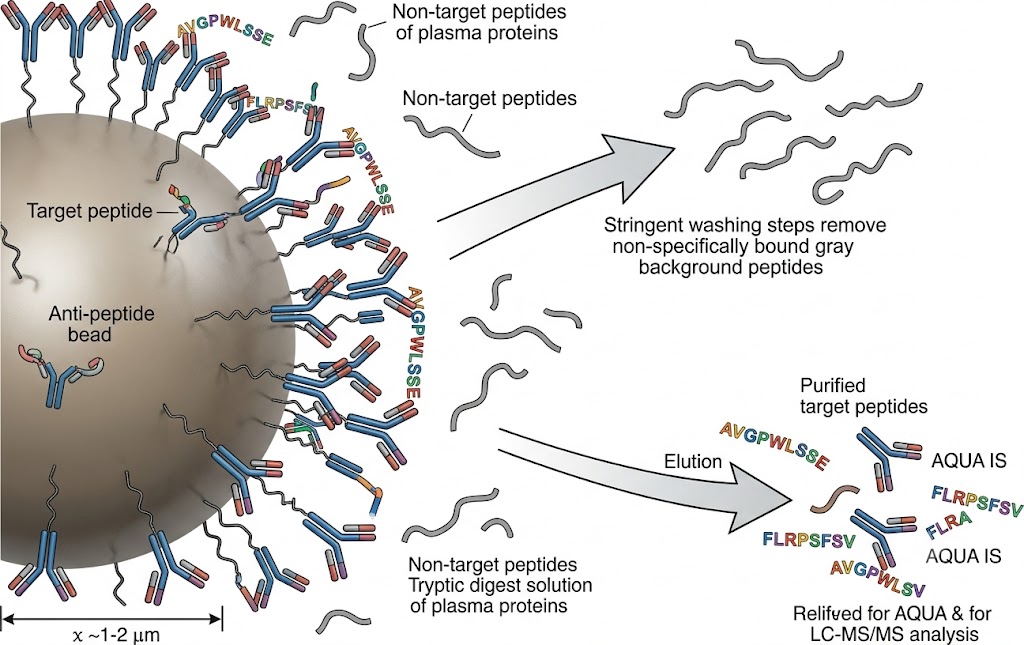
The SISCAPA workflow (Stable Isotope Standards and Capture by Anti-Peptide Antibodies) performs tryptic digestion on the total sample first, then uses anti-peptide antibodies to capture specific target peptides from the complex peptide mixture. Heavy-labeled AQUA internal standards added before capture normalise variability across digestion, capture, and LC-MS steps. The key advantage for multiplexed quantification is scalability: multiple anti-peptide antibodies can be added simultaneously, enabling 5-30+ targets per assay. Published work demonstrates automated multiplexed affinity enrichment of 29 peptide targets from plasma using scFv antibodies, detecting over 3,600 peptides not identified in neat plasma analysis.

IA-LC-MS Platform & Readout

All IA-LC-MS/MS assays are analysed on our high-resolution mass spectrometry platforms — Orbitrap Fusion Lumos for routine high-resolution PRM, Q Exactive HF-X for established high-throughput quantification, and Bruker timsTOF Pro for 4D-PRM with ion mobility-enhanced selectivity. Enriched peptides are separated by nanoLC and analysed with scheduled PRM methods optimised for each target panel. For SISCAPA, anti-peptide antibody validation includes cross-reactivity testing against the full tryptic digest, ensuring that each antibody captures only its intended target. PRM Targeted Proteomics readout provides full MS/MS spectra for every target, enabling confident peptide identification even at sub-ng/mL concentrations.

IA-LC-MS/MS Workflow

Step 1 — Reagent Selection & Assay Design: Define target proteins, select enrichment strategy (protein-level immunocapture vs SISCAPA), identify proteotypic peptides, and design the assay configuration. For custom projects, anti-peptide or anti-protein antibodies are developed or sourced and characterised for specificity.

Step 2 — Sample Preparation & Enrichment: For protein-level immunocapture, samples are incubated with antibody-coupled magnetic beads; after stringent washing, captured proteins are digested on-bead. For SISCAPA, samples are first digested with trypsin, AQUA internal standards added, and anti-peptide antibodies capture target peptides from the total digest.

Step 3 — LC-MS/MS Acquisition: Eluted peptides are analysed by nanoLC-MS/MS on the selected platform (Orbitrap Fusion Lumos, Q Exactive HF-X, or timsTOF Pro) with scheduled PRM or 4D-PRM methods optimised for the target panel. Full MS/MS spectra are acquired for every targeted precursor.

Step 4 — Data Processing & Quantification: Raw data are processed using Skyline or Spectronaut for peak integration, transition quality filtering, and endogenous-to-standard peak area ratio calculation. Absolute quantification values are determined from AQUA internal standard calibration curves.

Step 5 — Assay Validation & Reporting: Assay performance is characterised: linearity, LOD, LOQ, intra- and inter-assay precision, and spike-recovery accuracy in the target matrix. A comprehensive report is delivered with peptide-level and protein-level quantification data, performance metrics, and annotated chromatograms for every target in every sample.

Sample Requirements for Immunoaffinity-LC-MS/MS Quantification

Sample Type Recommended Input Key Notes
Plasma / Serum (protein-level IC) 50–200 µL High-abundant protein background may affect capture efficiency; dilution or depletion recommended for some low-abundance targets
Plasma / Serum (SISCAPA) 25–100 µL Digestion performed before enrichment; lower matrix interference than protein-level immunocapture
CSF 100–500 µL Low total protein content; larger input volume recommended for sub-ng/mL LOD
Tissue homogenate 50–200 µg total protein Clarified lysate required; compatible with both protein-level and SISCAPA enrichment
Cell lysate 100–500 µg total protein Pre-clearing with control beads recommended to reduce non-specific binding
Biotherapeutic / mAb formulation 10–100 µL Compatible with hybrid IA-LC-MS for biotherapeutic quantification in circulation

IA-LC-MS/MS Quantification in Practice

Our immunoaffinity-LC-MS/MS platform delivers robust quantitative data across diverse analytical scenarios. The examples below illustrate the sensitivity gain, analytical performance, and multiplexing capability of combined immunoaffinity enrichment and high-resolution LC-MS/MS detection for low-abundance target quantification.

Immunoaffinity enrichment principle showing anti-peptide antibody-conjugated magnetic beads capturing target peptides from a complex tryptic digest of plasma proteins with stringent washing steps

Immunoaffinity enrichment principle: magnetic bead-coupled anti-peptide or anti-protein antibodies selectively capture target analytes from complex biological matrices. Stringent washing removes background proteins, followed by elution and LC-MS/MS analysis with stable isotope internal standard normalisation.

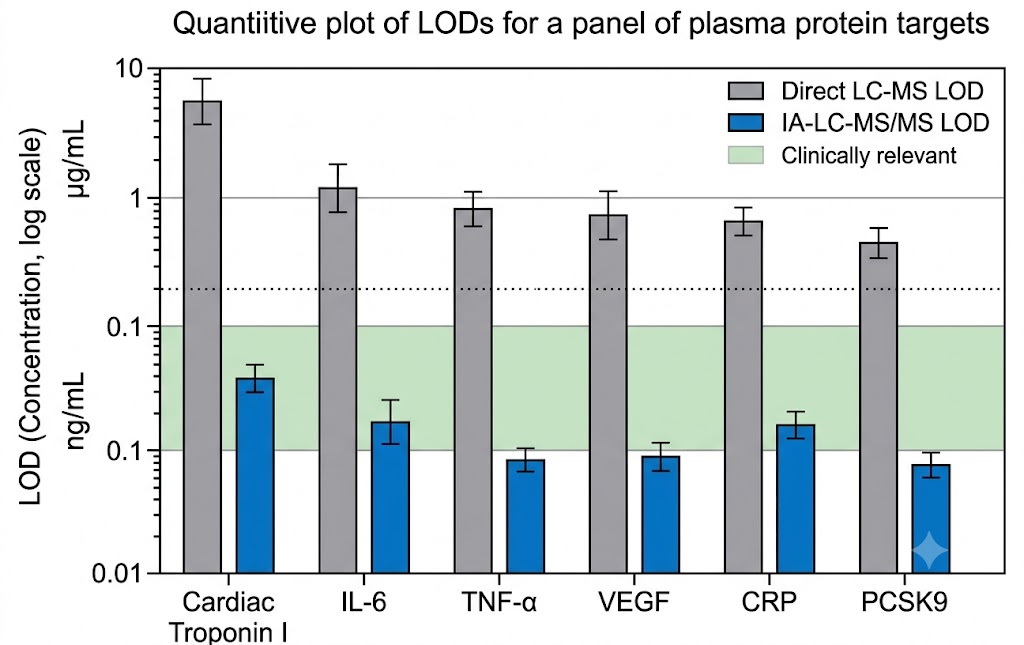
Sensitivity comparison plot showing direct LC-MS LOD in the microgram per mL range versus IA-LC-MS achieving sub-ng per mL detection for low-abundance protein targets in human plasma

Sensitivity comparison: IA-LC-MS/MS (blue) achieves 100-1,000× lower LODs compared to direct LC-MS analysis (grey) for the same protein targets in plasma, bridging the gap between discovery proteomics and high-sensitivity biomarker quantification.

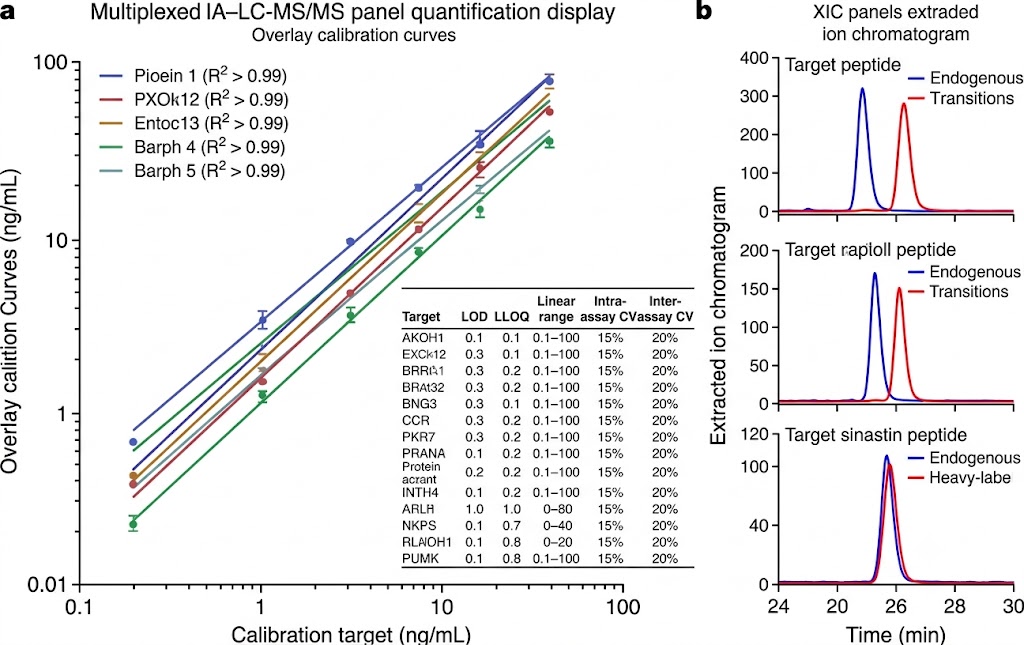
Multiplexed IA-LC-MS/MS quantification of 15 plasma protein targets showing individual calibration curves with LOD values and CVs for each target in a single multiplexed panel assay

Multiplexed IA-LC-MS/MS panel: simultaneous quantification of 15 plasma protein targets using multiplexed SISCAPA enrichment with individual AQUA internal standards. Each target shows linear response across its quantification range with intra-assay CVs below 15%.

CASE STUDY

Rapid and Sensitive Detection of SARS-CoV-2 Infection Using Quantitative Peptide Enrichment LC-MS Analysis

Hober A, Tran-Minh KH, Foley D, McDonald T, Vissers JPC, et al. eLife. 2021;10:e70843.

Background & Purpose

The COVID-19 pandemic created an unprecedented demand for scalable and specific diagnostic methods. While RT-PCR remained the gold standard for SARS-CoV-2 detection, supply chain limitations for reagents and consumables highlighted the need for orthogonal analytical approaches. Mass spectrometry-based methods offer the advantage of using commercially available reagents and existing laboratory infrastructure, but require sufficient sensitivity for viral protein detection in complex clinical matrices. This study aimed to develop a rapid, scalable LC-MS method using peptide immunoaffinity enrichment (SISCAPA) for the detection of SARS-CoV-2 nucleocapsid protein (NCAP) from throat, nasopharynx, and saliva swab samples.

Methods

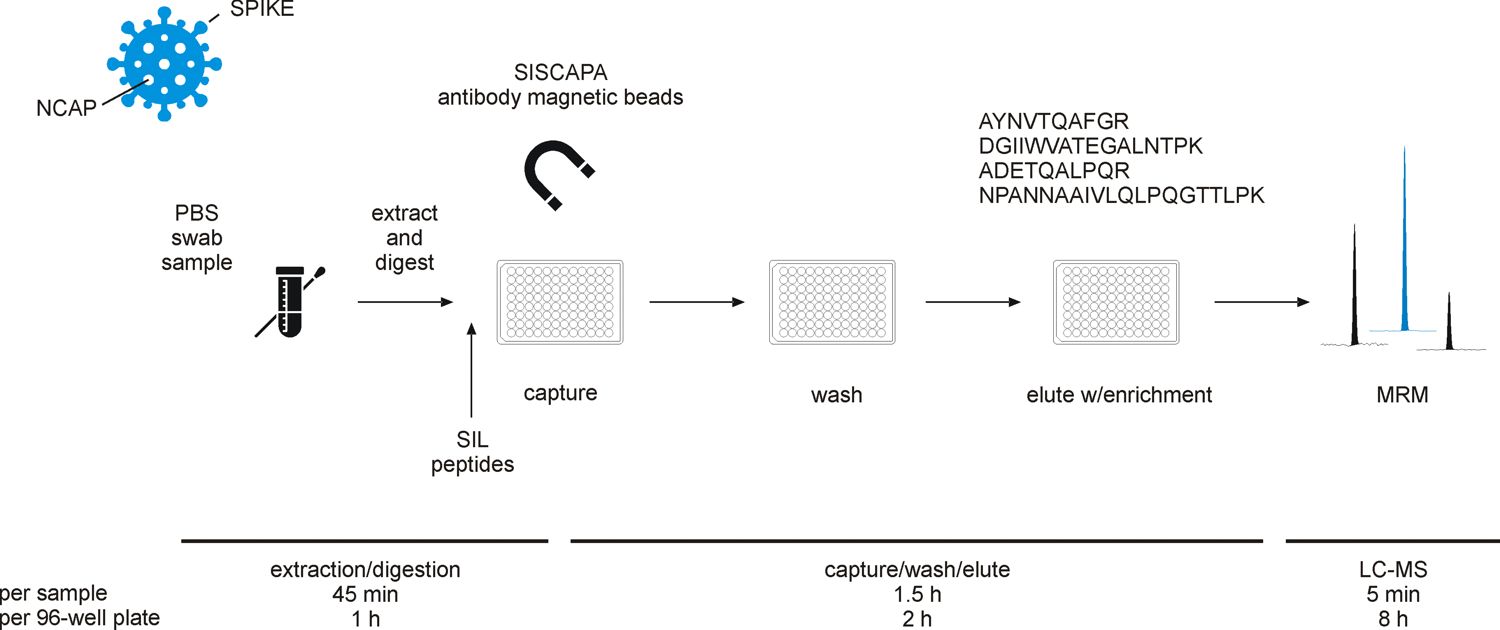
The research team developed a SISCAPA-based workflow: swab sample extracts were subjected to tryptic digestion, stable isotope-labeled (SIL) peptide internal standards were added, and anti-peptide antibodies coupled to magnetic beads captured specific NCAP peptides (AYNVTQAFGR, ADETQALPQR, NPANNAAIVLQLPQGTTLPK, and DGIIWVATEGALNTPK) from the complex peptide mixture. Captured peptides were eluted and analysed by LC-MRM mass spectrometry on a Waters Xevo TQ-XS system. A total of 337 clinical swab samples were analysed, including 156 SARS-CoV-2 positive and 181 negative samples confirmed by RT-PCR, across multiple laboratories using commercially available reagents and standard LC-MS instrumentation.

Results Overview

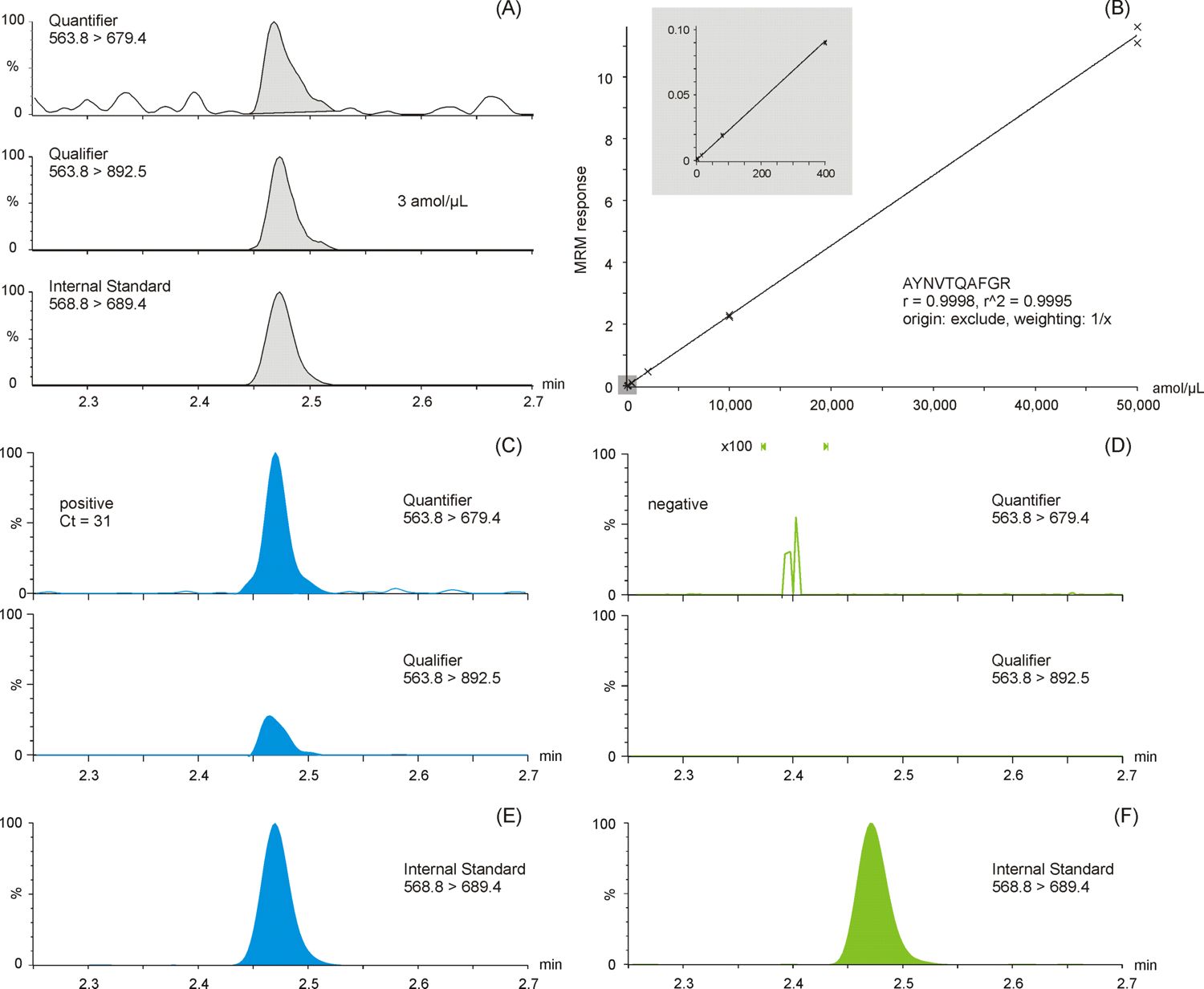
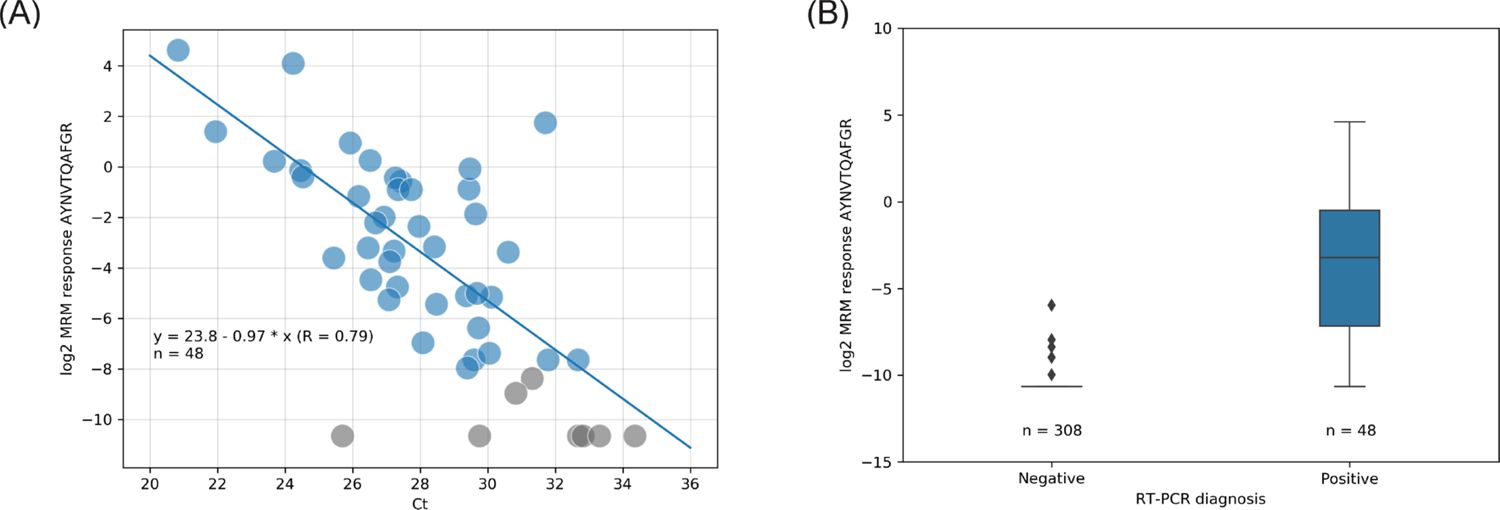
The IA-LC-MS/MS method demonstrated a limit of detection of 3 amol/µL for the primary target peptide AYNVTQAFGR (S/N > 10:1), with a linear dynamic range spanning over four orders of magnitude (3-50,000 amol/µL, R² > 0.99). Compared to RT-PCR, the LC-MS method showed 100% specificity (no false positives among 181 negative samples) and 94.7% sensitivity for samples with Ct ≤ 30, with a strong inverse correlation between LC-MS signal and RT-PCR Ct values (r = 0.79). The Cohen's kappa coefficient of 0.9 (95% CI 0.83-0.97) indicated near-perfect agreement between the LC-MS and RT-PCR methods. The assay successfully detected SARS-CoV-2 across multiple clinical sample types including throat, nasopharynx, and saliva swabs, demonstrating the versatility of the SISCAPA enrichment approach for viral protein detection in diverse biological matrices.

Case study: SISCAPA immunoaffinity enrichment LC-MS workflow for SARS-CoV-2 nucleocapsid protein detection from clinical swab samples

Figure 1 from Hober et al. 2021 (CC BY 4.0): Experimental workflow for immuno-affinity peptide (SISCAPA) enrichment LC-MS analysis of SARS-CoV-2 nucleocapsid protein, covering swab sample collection, tryptic digestion, stable isotope-labeled internal standard addition, anti-peptide antibody magnetic bead capture, and LC-MRM quantification.

Case study data: MRM chromatograms and calibration curve for SARS-CoV-2 nucleocapsid peptide AYNVTQAFGR at the lower limit of quantification

Figure 2 from Hober et al. 2021 (CC BY 4.0): MRM chromatograms of anti-peptide antibody enriched NCAP peptide AYNVTQAFGR at the LLOQ (3 amol/µL) showing quantifier and qualifier transitions alongside SIL internal standard (panel A), and calibration curve spanning four orders of magnitude (3-50,000 amol/µL) with R² > 0.99 (panel B).

Case study data: LC-MS versus RT-PCR correlation plot for SARS-CoV-2 detection in 337 clinical swab samples

Figure 3 from Hober et al. 2021 (CC BY 4.0): Correlation between LC-MS (log2 SIL-corrected quantifier peak area) and RT-PCR (Ct value) for clinical swab samples, demonstrating r = 0.79 inverse correlation (panel A), with quartile distribution showing significant differentiation between sample groups (panel B; p = 0.00018, Mann-Whitney U test).

Conclusion

This study validates the application of SISCAPA-based IA-LC-MS/MS for sensitive and specific detection of viral proteins in complex clinical matrices, achieving 100% specificity and 94.7% sensitivity (Ct ≤ 30) using commercially available reagents and standard LC-MS instrumentation. The workflow principles established here — anti-peptide antibody capture, stable isotope internal standard normalisation, and multiplexed MRM readout — are directly applicable to any IA-LC-MS/MS quantification project requiring robust analytical performance in complex biological matrices, including biomarker validation studies and low-abundance protein quantification in clinical samples.

Frequently Asked Questions

Q1: What sensitivity (LOD) can I expect from IA-LC-MS/MS compared to direct LC-MS?

Immunoaffinity enrichment typically improves LODs by 100-1,000× compared to direct LC-MS analysis of the same matrix. In plasma, direct LC-MS achieves LODs in the low µg/mL range for most targets. With IA-LC-MS/MS — particularly using SISCAPA or magnetic bead-based immunocapture — we routinely achieve LODs in the 0.1-10 ng/mL range from 100 µL plasma, and sub-ng/mL from larger input volumes. The exact LOD depends on target abundance, antibody capture efficiency, and matrix complexity.

Q2: What is the difference between protein-level immunocapture and SISCAPA peptide-level enrichment?

In protein-level immunocapture, antibodies raised against the intact target protein capture the full-length protein from the matrix before digestion. This preserves PTMs and allows conformational targeting, but multiplexing is limited to 2-5 targets. In SISCAPA, the sample is digested first, and anti-peptide antibodies capture specific tryptic peptides from the digest. SISCAPA is more scalable for multiplexing (5-30+ targets per assay) and requires only peptide-level reagents, but does not preserve protein-level information such as intact molecular weight.

Q3: How many targets can you multiplex in a single IA-LC-MS/MS assay?

For SISCAPA-based IA-LC-MS/MS, we routinely multiplex 5-15 targets per assay and can extend to 20-30 targets with additional method optimisation. Published work has demonstrated multiplexed affinity enrichment of 29 peptide targets from plasma in a single automated analysis. For protein-level immunocapture, multiplexing is typically limited to 2-5 targets due to antibody compatibility requirements, but can be expanded using pooled antibody-bead cocktails with careful cross-reactivity testing.

Q4: Can you develop custom anti-peptide antibodies for novel targets?

Yes. Custom anti-peptide antibody development is available for novel targets. The process includes target peptide selection based on proteotypic properties and uniqueness, peptide synthesis and conjugation, immunisation (rabbit polyclonal or mouse monoclonal), antibody purification, and specificity testing. Typical timelines are 8-12 weeks for polyclonal and 12-16 weeks for monoclonal antibodies. We provide a feasibility assessment before initiating development to confirm target peptide suitability for SISCAPA-based enrichment.

Q5: How does IA-LC-MS/MS compare to ELISA for biomarker quantification?

IA-LC-MS/MS offers three distinct advantages over ELISA: sequence-level specificity (no antibody cross-reactivity), multiplexing capability (5-30 targets vs single-plex ELISA), and full MS/MS spectral confirmation of peptide identity. ELISA typically offers lower LODs (high pg/mL range) and higher throughput for established single-target assays. The methods are complementary: ELISA is optimal for routine single-target clinical measurement, while IA-LC-MS/MS is preferred for multiplexed biomarker panels, novel targets without validated ELISA reagents, and situations requiring MS-level specificity.

References

  1. Schneck NA, Phinney KW, Lee SB, Lowenthal MS. Quantification of cardiac troponin I in human plasma by immunoaffinity enrichment and targeted mass spectrometry. Anal Bioanal Chem. 2018;410:2805-2813.
  2. Mosquim Junior S, Levander F. Automated multiplexed affinity-based enrichment of peptides for LC-MS/MS plasma proteomics. Proteomics. 2024;24(21-22):e2400049.
  3. Kuhn E, Addona T, Keshishian H, Burgess M, Mani DR, Lee RT, Sabatine MS, Gerszten RE, Carr SA. Developing multiplexed assays for troponin I and interleukin-33 in plasma by peptide immunoaffinity enrichment and targeted mass spectrometry. Clin Chem. 2009;55(6):1108-1117.

GET STARTED

Quantify Your Low-Abundance Protein Targets

From single-target immunoaffinity assays to multiplexed 30-plex panels — our IA-LC-MS/MS platform delivers the sensitivity your project demands. Every project is supported by antibody reagent characterisation, method development, analytical validation, and comprehensive data reporting.

Ready to discuss your low-abundance quantification requirements?

Request a Customized Quote